Writing
Why FAQs Boost Visibility in AI Search
Published November 29, 2025
Gone are the days of traditional Google Search.
Not only has Google Search forever changed with the integration of AI Overviews and AI Mode into its interface, but also incredibly powerful search alternatives have emerged: AI platforms like Grok, ChatGPT, Perplexity, and more.
The rapid advancement of AI search has been staggering. According to Semrush, traffic from AI search could surpass that from traditional Google search by “early 2028.”
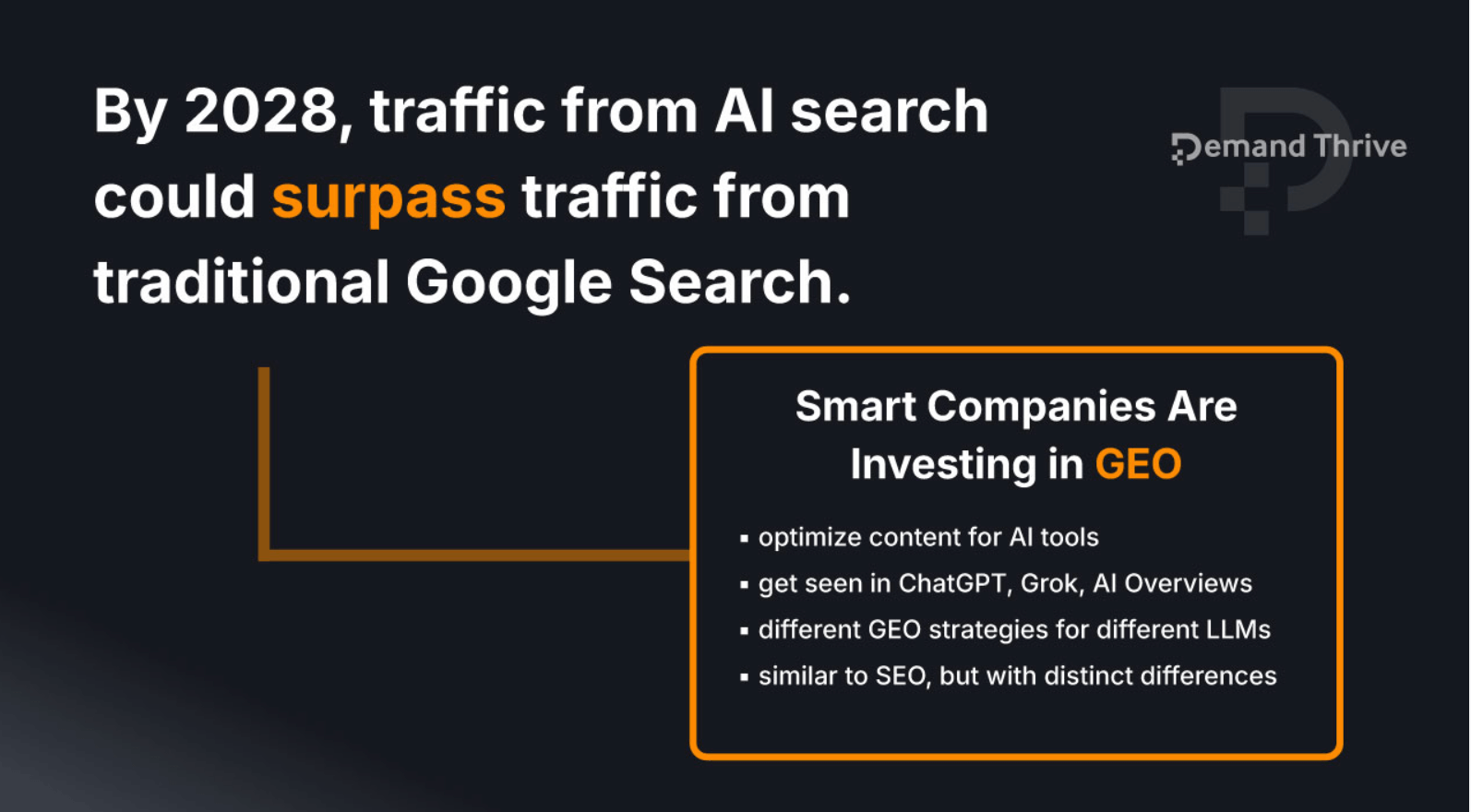
As AI search continues to grow, businesses need to think seriously about Generative Engine Optimization (or AI SEO). While highly similar to SEO, GEO doesn’t focus on rankings. Instead, it focuses on influence and discoverability in AI search.
Ambitious businesses should optimize for AI-powered search. This article focuses on one tactic: incorporating strong FAQ content.
What is an FAQ?
A Frequently Asked Questions or FAQ section on your website is a highly effective way to answer important questions relative to your business, products, services, industry, and more. It typically consists of a list of questions that then have short, 1-3 sentence answers.
Here’s an example of an FAQ on our website’s homepage:
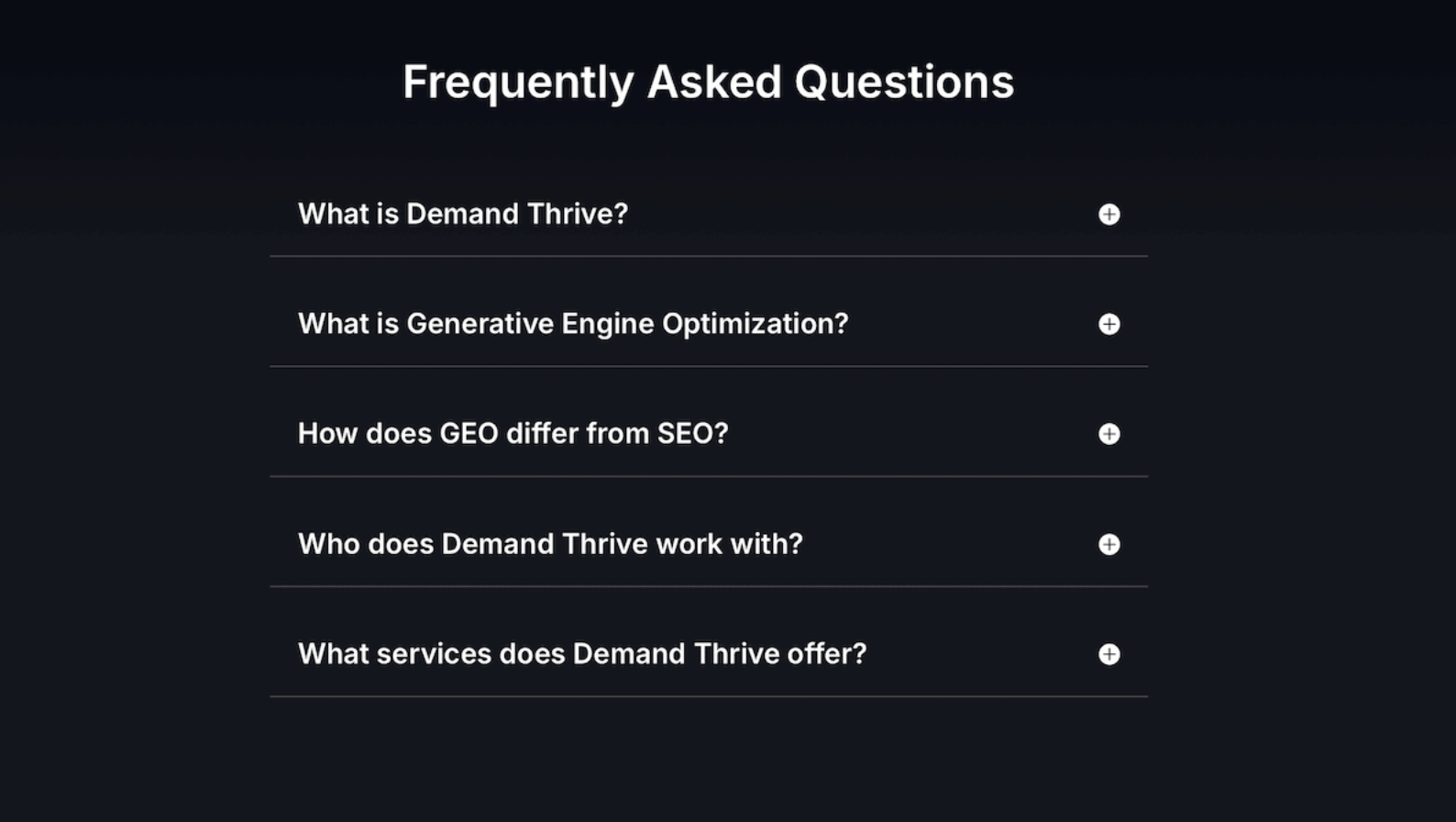
Not only does a great FAQ section improve user experience by making it easier to understand your offerings, it also boosts AI visibility.
Here are three reasons why FAQs are useful for improving AI visibility:
FAQs Provide Clear and Concise Answers
AI platforms prefer content that answers a question plainly, without burying the point under marketing fluff. An FAQ pairs a natural-language question with a short, direct answer—the same shape as the prompts people type into ChatGPT, Perplexity, Grok, and Google’s AI experiences.
When your answers are concise and specific, AI systems can more easily extract and reuse them. That raises the odds your brand or page gets mentioned or cited when someone asks a related question.
FAQs Are in a Machine-Readable Format
FAQ content maps cleanly to structured patterns AI and search systems already understand: question, then answer; often with FAQ schema markup. That structure makes it easier for engines to parse what you are claiming and when it applies.
Even without inventing elaborate markup for every page, the Q&A format itself is machine-friendly. Headings as questions, short paragraphs as answers, and consistent wording help both traditional SEO and Generative Engine Optimization.
FAQs Answer Long Tail Queries
People ask AI systems detailed, long-tail questions—not just broad keywords. FAQs are a natural place to cover those specifics: pricing nuances, process steps, eligibility, comparisons, and “how does X work for Y?” prompts.
For example, someone might ask an AI overview-style question about how AI Overviews work, or how a particular service differs from a competitor. A long-tail FAQ entry can address that exact intent with a clear answer, increasing the chance your content is useful when the model builds a response.
Covering those longer queries doesn’t replace a full content strategy, but it fills gaps that blog posts and product pages often leave open—and those gaps are where AI answers frequently draw from.
Conclusion
FAQs won’t replace authoritative content, technical performance, or a broader Generative Engine Optimization strategy—but they are a practical, high-leverage tactic for AI visibility. Clear questions, concise answers, and long-tail coverage make your site easier for AI systems to understand and cite.
If you want help installing FAQ content and the rest of an AI visibility program, Demand Thrive can help.
Or get in touch.